Do WiFi Range Extenders Work? Evaluating Their Effectiveness
Understanding WiFi Range Extenders
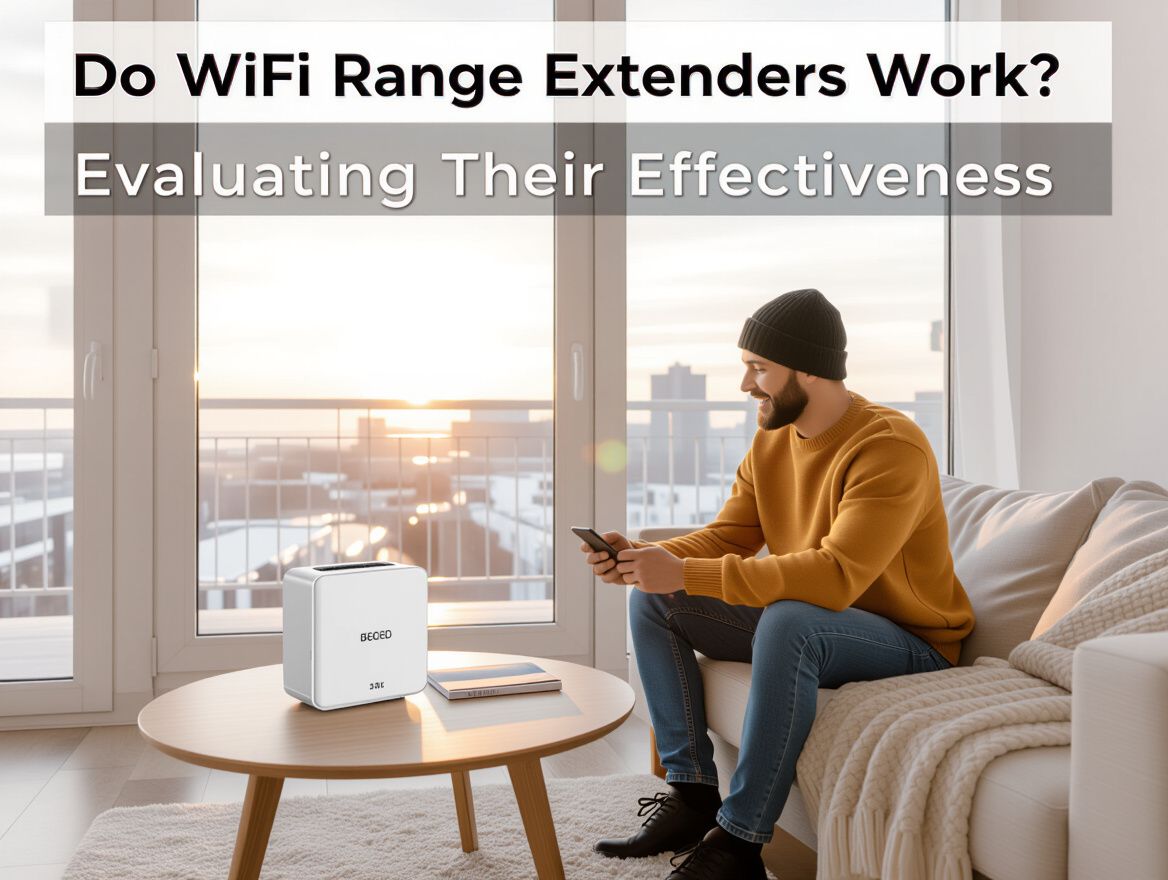
WiFi range extenders are devices designed to boost the coverage of your existing wireless network by receiving the signal from your router and rebroadcasting it to areas where the signal is weak or non-existent. They are particularly useful in homes with dead zones, where the WiFi signal struggles to reach, such as basements or distant rooms.
Common Use Cases
- Large Homes: Extenders can fill coverage gaps in larger living spaces where a single router may not suffice.
- Multi-Story Buildings: They help in transmitting signals across floors, overcoming barriers like walls and floors.
- Temporary Solutions: Ideal for renters or those looking for a quick fix without extensive wiring or installation.
Alternative Solutions
While WiFi range extenders can be effective, they may not always be the best solution. Alternatives include:
- Mesh Networks: These systems use multiple nodes to create a seamless network, providing better coverage and speed across larger areas without significant speed degradation.
- MoCA Adapters: These utilize existing coaxial cables in your home to deliver a wired connection, which can be more reliable than wireless solutions.
- Direct Ethernet Connections: For stationary devices, running Ethernet cables can provide the most stable and fastest connection, eliminating the issues often faced with wireless solutions.
When considering WiFi range extenders, it’s essential to evaluate your specific needs, the layout of your home, and whether the trade-offs in speed and reliability align with your connectivity requirements.
How Do WiFi Range Extenders Work?
WiFi range extenders function by capturing the existing signal from your router and rebroadcasting it to areas where the signal is weak or nonexistent. This process can help improve coverage in larger homes or spaces with physical obstructions. However, understanding the technology behind these devices is crucial for determining whether they meet your specific networking needs.
Mechanism of Signal Boosting
- Signal Reception: Range extenders pick up the WiFi signal from your router, often at a weaker strength.
- Rebroadcasting: The extender then retransmits this signal, which can help eliminate dead zones in your home.
- Speed Considerations: While they can improve coverage, extenders may reduce overall network speed due to the way they handle data—essentially splitting bandwidth between the original and extended networks.
Differences Between Extenders and Other Devices
- Repeaters: Similar to extenders, repeaters also amplify the WiFi signal but do so by creating a new network. This can lead to slower speeds and more complicated network management.
- Mesh Systems: In contrast, mesh networks use multiple nodes that communicate with each other to provide a seamless WiFi experience throughout a larger area. They often outperform extenders in terms of speed and reliability, especially in larger spaces.
Factors Influencing Extender Performance
- Placement: The location of the extender is critical; it should be positioned within a good signal range of the router to effectively boost the signal.
- Interference: Physical barriers like walls, floors, and electronic devices can degrade performance.
- Network Congestion: The number of devices connected can also impact speed and reliability, as extenders share bandwidth across connected devices.
By evaluating these factors, home users can better assess whether a WiFi range extender is the right solution for enhancing their network coverage compared to alternatives like mesh systems or direct Ethernet connections.
Performance Analysis: Are WiFi Range Extenders Effective?
When considering whether WiFi range extenders work effectively, it's crucial to analyze their performance in terms of speed, latency, and real-world usability. While extenders can enhance coverage in certain scenarios, they often come with trade-offs that may not make them the best solution for every home setup.
Speed and Bandwidth Considerations
WiFi range extenders function by receiving the existing signal from your router and rebroadcasting it to extend coverage. However, this process can lead to a reduction in bandwidth. Research indicates that extenders may effectively halve your available speed, particularly if they are not placed optimally. For users with high bandwidth needs, such as streaming or gaming, this degradation can be a significant drawback.
Impact on Latency and Network Congestion
Extenders can introduce additional latency into your network. The time it takes for data to travel from the router to the extender and back can slow down your internet experience, especially in high-demand environments. Furthermore, if multiple devices are connected to the extender, network congestion can worsen, leading to further delays and decreased performance.
Real-World Performance Metrics
Studies show that while WiFi extenders can provide a quick fix for coverage gaps, their effectiveness varies widely based on environmental factors. For instance, interference from walls, furniture, and neighboring WiFi networks can significantly impact performance. In contrast, alternatives like mesh networks often maintain higher speeds and lower latency by utilizing multiple nodes to create a seamless network.
Conclusion on Effectiveness
Ultimately, while WiFi range extenders can work in specific scenarios—particularly in small homes with minimal interference—they may not be suitable for larger spaces or users with high bandwidth needs. Evaluating your specific requirements against the limitations of extenders is essential when deciding on the best networking solution for improved WiFi coverage and performance.
WiFi Range Extenders vs. Mesh Networks: A Comparison
When considering how to enhance your home WiFi coverage, it's essential to compare WiFi range extenders with mesh networking systems. Each option has distinct advantages and limitations that can significantly affect your decision based on your specific needs.
Pros and Cons
WiFi Range Extenders:
-
Pros:
- Cost-effective: Generally lower initial investment compared to mesh systems.
- Easy installation: Usually requires minimal setup, making it accessible for most users.
- Quick fixes: Ideal for small areas with dead zones that need immediate coverage.
-
Cons:
- Performance degradation: Extenders often halve your bandwidth as they rebroadcast the existing signal.
- Limited coverage: Not suitable for larger homes or areas with multiple obstacles.
- Increased latency: May introduce lag, especially in high-demand scenarios.
Mesh Networks:
-
Pros:
- Comprehensive coverage: Designed to blanket large areas, eliminating dead zones effectively.
- Seamless connectivity: Devices communicate with each other for a stable and fast connection.
- Scalability: Easily expandable by adding more nodes as needed.
-
Cons:
- Higher cost: Typically more expensive than range extenders, which may not fit all budgets.
- Complex setup: Initial configuration can be more involved depending on the system.
Cost-effectiveness and Installation Complexity
-
WiFi Range Extenders are often the go-to for budget-conscious users seeking a quick solution. Their straightforward installation process allows users to enhance their network without the need for professional assistance.
-
Mesh Systems, while pricier, offer a more robust solution for those needing extensive coverage and who are willing to invest the time in setup. The complexity can vary depending on the brand and model, but many modern systems are designed for user-friendliness.
Best Use Cases
-
WiFi Range Extenders are best suited for:
- Small homes or apartments with a few dead zones.
- Users who need an inexpensive and quick fix for connectivity issues.
- Situations where high-speed internet is not critical.
-
Mesh Networks excel in:
- Larger homes or multi-story buildings where coverage is uneven.
- Families with multiple devices requiring stable connections for streaming, gaming, or remote work.
- Users looking for a long-term, scalable solution that can adapt to future needs.
In conclusion, your choice between a WiFi range extender and a mesh network should be guided by your specific coverage needs, budget constraints, and the complexity you're willing to handle during installation. Consider these factors carefully to ensure you select the optimal solution for your home networking challenges.
Risks and Limitations of Using WiFi Range Extenders
While WiFi range extenders can provide a quick solution to coverage issues, they come with several risks and limitations that can affect your network's performance.
-
Signal Quality Degradation: Extenders work by capturing and rebroadcasting your existing WiFi signal. This process can lead to reduced speeds, as the signal may lose quality during transmission. In some cases, users may experience slower internet speeds in the areas where the extender is used compared to the main router.
-
Coverage Limitations: The effectiveness of a WiFi range extender is highly dependent on its placement and the distance from the main router. If the extender is too far from the router, it may only capture a weak signal to rebroadcast, resulting in limited coverage and performance. Additionally, extenders typically have a finite range; they may not be suitable for larger homes or areas with multiple floors.
-
Unsuitable Situations: In environments with heavy interference (such as those with thick walls or numerous electronic devices), range extenders may struggle to provide reliable coverage. Moreover, if your home has a high demand for simultaneous connections, such as for gaming or streaming, a range extender may not handle the load effectively, leading to connectivity drops or lag.
Before investing in a WiFi range extender, consider these factors alongside your specific networking needs. Evaluating the potential trade-offs will help you determine if an extender is the best solution or if alternatives like mesh networks or wired connections might better suit your situation.
Common Buyer Questions about WiFi Range Extenders
When considering a WiFi range extender, it's crucial to understand its benefits, assess your home's needs, and weigh the factors before making a purchase. Here are some common questions that can guide your decision-making process:
What are the main benefits of using a WiFi range extender?
- Cost-Effective Solution: WiFi range extenders are generally more affordable than complete networking systems like mesh networks.
- Simple Installation: Most extenders are easy to set up, requiring minimal technical knowledge. They usually plug directly into an outlet and can be configured through an app or web interface.
- Quick Fix for Dead Zones: If you have specific areas in your home with weak WiFi signals, extenders can help eliminate those dead zones by amplifying the existing signal.
How do I know if a range extender is right for my home?
- Size of Your Home: For small to medium-sized homes with a few dead spots, a range extender may suffice. However, larger homes may benefit more from a mesh network.
- Current Internet Speed: If your internet service is already slow, a range extender may not significantly improve your experience, as they can reduce bandwidth due to signal rebroadcasting.
- Layout and Obstacles: Homes with thick walls or multiple floors may experience more interference, which could limit the effectiveness of a range extender.
What should I consider before purchasing an extender?
- Performance Trade-offs: Understand that while extenders can boost coverage, they might also halve your available bandwidth, leading to slower speeds in some cases.
- Placement Challenges: Extenders need to be strategically placed between your router and the area needing coverage. Poor placement can lead to suboptimal performance.
- Alternatives: Consider other options like mesh networks or wired connections (e.g., MoCA adapters) that might provide better coverage and speed for larger or more complex layouts.
By addressing these questions, you can better evaluate whether a WiFi range extender meets your specific needs or if an alternative solution might be more effective for enhancing your home network.
Conclusion: Are WiFi Range Extenders Worth It?
In evaluating whether WiFi range extenders meet your connectivity needs, it's essential to consider the trade-offs and alternatives available. While extenders can effectively boost signal strength in specific areas of your home, they may also introduce performance issues such as reduced speeds and increased latency.
Key points to consider include:
- Performance Degradation: Extenders often halve your bandwidth, which can impact online activities like gaming or streaming, especially if multiple devices are connected.
- Placement Challenges: The effectiveness of a range extender is heavily influenced by its placement. Poor positioning can lead to suboptimal performance, making it crucial to find an outlet that maximizes coverage.
- Alternatives: For larger homes or more demanding connectivity needs, mesh networks or MoCA adapters may offer better performance and reliability without the drawbacks associated with extenders.
Before making a decision, assess your specific needs:
- Home Layout: Consider the size and structure of your home. If you have multiple floors or thick walls, a mesh system might be more effective.
- Usage Requirements: Evaluate how you use your internet. For heavy users, direct Ethernet connections may provide the best reliability.
- Budget and Installation: Determine what you are willing to spend and how much effort you want to put into installation. Extenders are typically more affordable and easier to install than mesh systems.
Next steps for improving your home WiFi could include:
- Testing your current WiFi performance in various areas of your home to identify dead zones.
- Researching alternative solutions that may provide a more robust coverage strategy.
- Consulting with a networking professional if you're considering a more complex setup, like a mesh network or wired connections.
Ultimately, while WiFi range extenders can serve as a quick fix for certain situations, understanding your unique requirements and exploring all options will help you make the most informed decision for your home network.
More in Wifi Range Extenders
View All